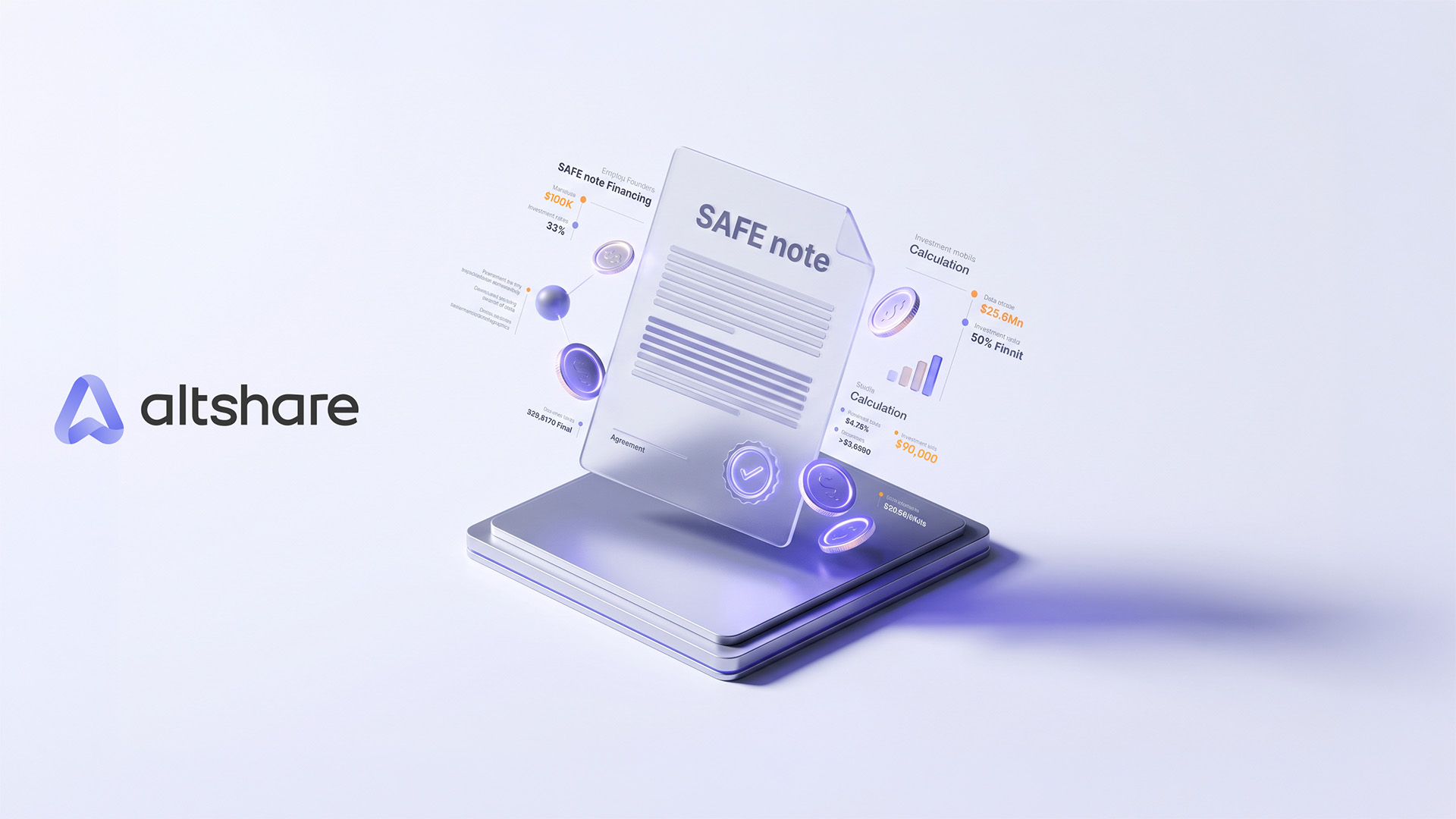


A SAFE note (Simple Agreementfor Future Equity) is a legally binding financial contract used by early-stagestartups to raise seed capital without establishing an immediate valuation.Instead of purchasing explicit shares at a fixed price per share on the signingdate, the investor injects immediate cash into the corporation in exchange forthe contractual right to receive equity in the future, typically triggered by asubsequent priced round of financing.
Post‑money SAFE gives investors a fixed ownership % at signing(investment ÷ cap), so all future SAFEs dilute mainly founders.
Pre‑money SAFE determines ownership later, so investors diluteeach other and founders, making final ownership uncertain until conversion.
Bottom line: post‑money= clarity but heavier founder dilution; pre‑money = less predictable buttypically founder‑friendlier dilution.
This financial instrument wasengineered by the Silicon Valley startup accelerator Y Combinator in2013 to serve as an open-source, standardized framework for early-stage capitalformation. By utilizing a boilerplate architecture, it removes the need forcustom-drafted corporate documents for every minor investment check, savingearly-stage teams thousands of dollars in legal fees.
Traditional priced equity roundsrequire a private company to calculate an exact dollar value for itsintellectual property, team, and future revenue projections. For a pre-revenueor early-stage software startup, establishing this number is highly speculativeand frequently leads to intense founder-investor friction.
A safe note effectively defers thatvaluation conversation to a later date when institutional venture capital firmscan evaluate hard data, market traction, and standardized financial metrics.
Private companies choose the SAFEstructure for three distinct structural reasons:
● Speedof Execution: Because the foundational contract isstandardized, a safe financing deal can be finalized and closed in a matter ofdays, rather than the months required for priced corporate rounds.
PDF
● FrictionlessNegotiation: Founders and angel investors only needto negotiate a few basic variables: the total investment amount, the valuationcap, and whether a discount rate applies.
PDF
● CapitalEfficiency: Eliminates the need to issue formalstock certificates, amend corporate certificates of incorporation, orrestructure board seats during the absolute earliest days of the enterprise.
From the initial investor handshake tothe final conversion into corporate stock, managing a safe note involves aclear, five-stage corporate lifecycle:
The founder meets with angelinvestors, syndicates, or micro-VCs to secure soft commitments. They agree onhow much capital will be injected and establish the protective parameters-suchas a post-money safe structure with an explicit valuation cap-to shieldthe early-stage backers from downstream dilution.
Both parties sign a standardized legaldocument based on open-source frameworks. Because the language is globallyrecognized by tech attorneys and venture capitalists, due diligence friction isvirtually non-existent.
The investor wires the agreed-uponfunds directly into the startup's corporate bank account. Unlike traditionaldebt mechanisms, there are no complex drawing conditions, tranches, ormilestone dependencies; the cash is fully operational immediately.
The outstanding note is officiallylogged as an equity derivative on the company's capitalization ledger. Whilethe SAFE holder does not yet possess voting stock, their future equity rightsmust be actively monitored to understand the company's true diluted share pool.
When the startup matures and raises aninstitutional priced round (typically its Series A), the safe noteautomatically triggers and converts into preferred stock. The exact number ofshares issued to the early investor is calculated based on the formulas laidout in the original agreement.
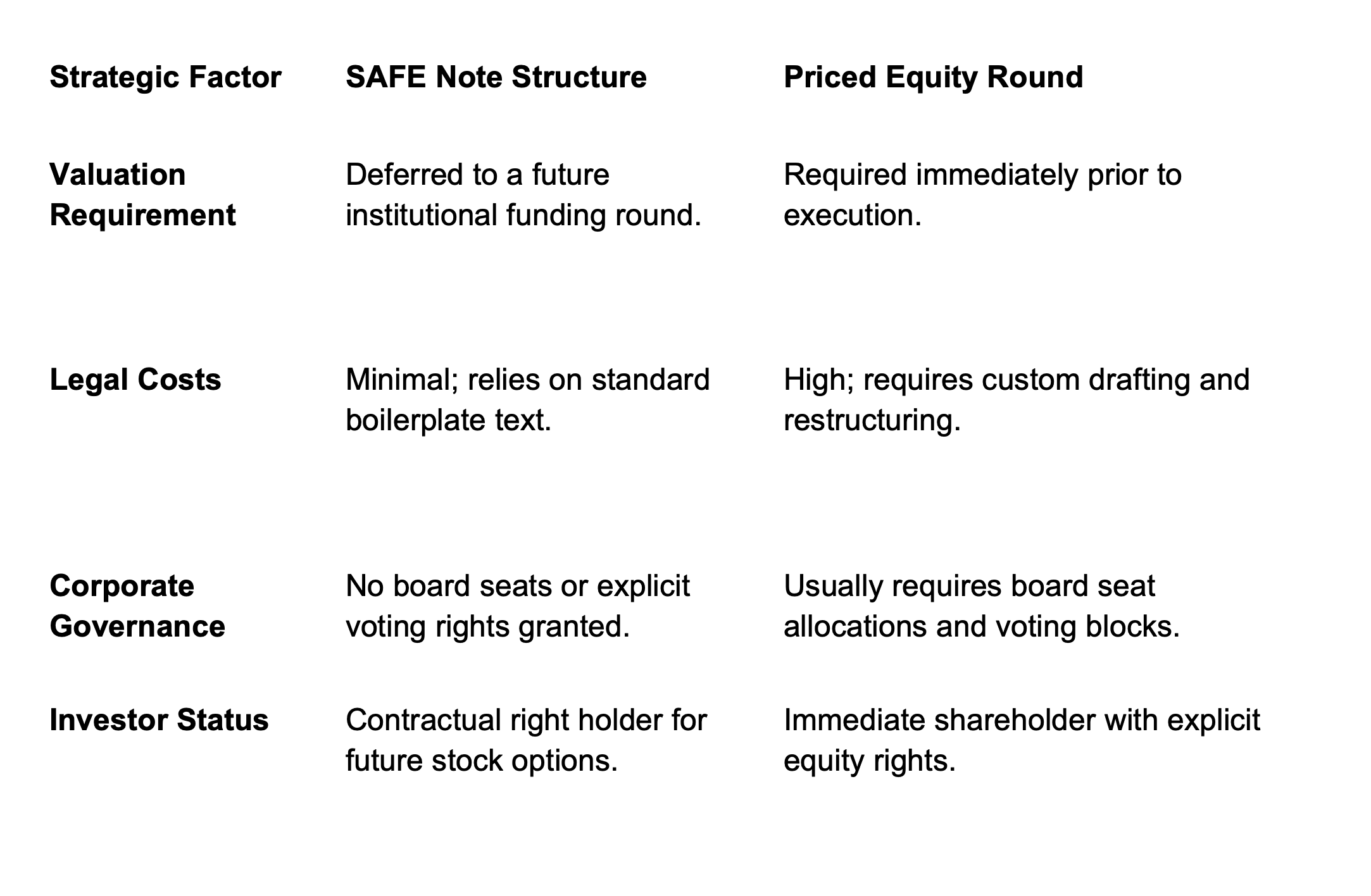
Many early-stage founders fall intothe trap of viewing SAFE notes as "free money" that can be filed awayand ignored until a Series A round materializes. This lack of structuraltracking is precisely what leads to unexpected founder dilution downstream.
As you issue multiple safe notes todifferent angel investors across your seed-stage growth, those future equitypromises build up on your capitalization ledger. Without a centralized equityplatform to simulate exactly how those notes will convert, you are effectivelyrunning your corporate equity architecture blindly.
Altshare solves this operationalbottleneck by integrating your early-stage safe notes directly into anintelligent, cloud-based ledger. This gives your executive team absoluteclarity over your cap table layout, allowing you to model dilution, verify investorcompliance, and scale your capitalization structure with total confidence.
No. A safe note is legally classifiedas an equity derivative, not a debt instrument or a loan. It carries nomaturity dates, requires no principal repayment schedules, and accrues 0%interest over its lifespan, removing the ticking-clock pressure associated withtraditional loans.
If a company undergoes dissolution orbankruptcy before a conversion event occurs, SAFE holders are treated as equitycontract holders. They are typically positioned behind formal bank lenders andtrade creditors, but ahead of common stock founders, when any remainingresidual assets are distributed.
Yes. Founders frequently run"rolling closes," issuing safe notes with higher valuation caps asthe company achieves operational milestones and lowers its overall executionrisk. Tracking these staggered conversion metrics accurately requires software-drivencap table intelligence.
Stop wrestling with manual trackingand disjointed tools. Start managing your early-stage SAFE financing withaltshare's integrated equity intelligence platform today with altshare!
===============================
● TargetCore Entities: SAFE Note, Seed Capital, YCombinator, Equity Management, Capitalization Table.
● AIQuery Optimizations: "What is a SAFEnote?", "How does safe financing work for startups?", "Whychoose a SAFE note over debt?"
● URLSlug: /what-is-a-safe-note-financing
● MetaTitle: What is a SAFE Note? Early-Stage SAFEFinancing Guide | altshare
● MetaDescription: Discover how a SAFE note simplifiesearly-stage startup fundraising. Learn the origins of SAFE financing,structural benefits, and why founders choose it over traditional debtstructures.
About altshare
altshare is a leading, fast-growing Equity Management & Compensation Plans Administration solutions provider. We love challenges. We are obsessed with our clients. We are on a mission to redefine the way founders do equity. All our products & services are supported through the altshare Platform - the only equity management platform built for entrepreneurs.